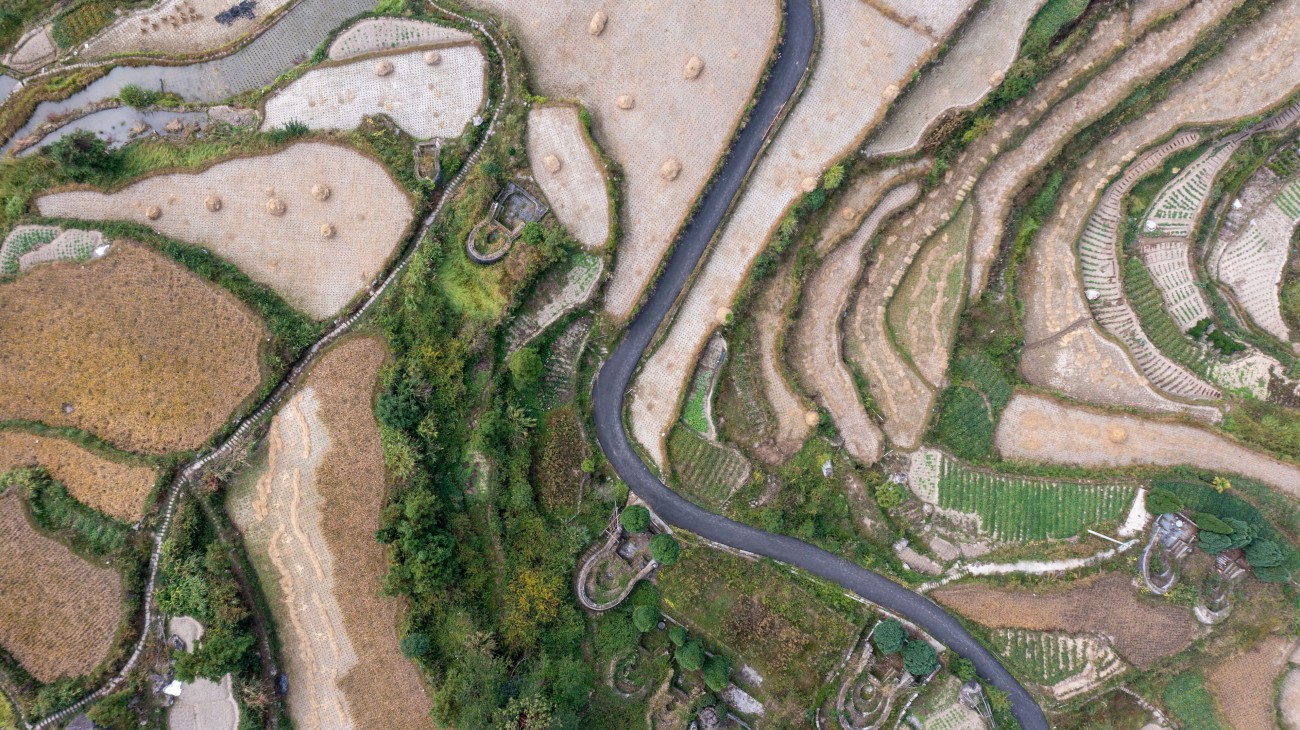
Countries have already promised to restore 1 billion hectares – an area larger than China – as part of international climate, nature, and land goals. However, little is known about the progress or quality of this restoration. With the World Restoration Flagships, the UN is honouring the best examples of large-scale and long-term ecosystem restoration in any country or region, embodying the 10 Restoration Principles of the UN Decade.
Get inspired and join #GenerationRestoration.

KSA National Greening Program
Kingdom of Saudi Arabia |From reviving rangelands to reintroducing the Arabian oryx, gazelle and ibex, this greening programme is turning back decades of desertification across some of the world's most water-scarce landscapes.

Sahel Integrated Resilience Initiative
Burkina Faso, Chad, Mali, Mauritania and Niger |Since 2018, this initiative has been turning degraded drylands into a lifeline for food security, rehabilitating soils and building resilience against drought, conflict and climate shocks for millions of people.

Restoring Brazil's Cerrado Savannah
Brazil |A collaborative effort to restore the Cerrado’s native vegetation while strengthening biodiversity, water security, climate resilience and local restoration economies.

Bamboo-based Restoration
Cameroon, Ecuador, Ethiopia, Ghana, Kenya, Peru, Sri Lanka, Uganda and Viet Nam |Across nine countries in Africa, Asia and Latin America, bamboo is being harnessed as a fast-growing, sustainable plant for land restoration, reversing the impacts of intense agriculture, logging, demand for fuelwood and charcoal and climate change.

Ecosystems Restoration in Mar Menor
Spain |The Spanish Government launched an ambitious intervention, aimed at restoring the natural dynamics and solving the problem from the source.

Restoring the Northern Mozambique Channel Region
The Comoros, Madagascar, Mozambique, Tanzania |As part of the efforts to manage, protect and restore the coral-rich Northern Mozambique Channel, Comoros, Madagascar, Mozambique, and Tanzania are working together to restore blue and green forests.

Comprehensive Island Restoration in Mexico
Mexico |A restoration initiative launched to reverse the negative impacts of invasive species and revitalize the unique ecosystem of Mexico's seabird Islands.

Revitalizing Korea’s Forests From Fire
Republic of Korea |The Uljin forest fire will be remembered as one of the Republic of Korea’s worst ecological disasters, burning through over 20,000 hectares in about ten days.

The Restoration Initiative
Cameroon, China, Democratic Republic of the Congo, Central African Republic, Guinea-Bissau, Kenya, Pakistan, Sao Tome and Principe, Tanzania |The Restoration Initiative is designed to translate global restoration goals to local contexts by boosting local restoration economies, such as nurseries, training smallholder farmers and pastoralists, removing invasive species and informing government policies.

Thicket Restoration in South Africa
South Africa |Thicket Restoration in South Africa unites over 60 initiatives across Eastern and Western Cape. The initiative aims to restore 800,000 ha by 2030.